

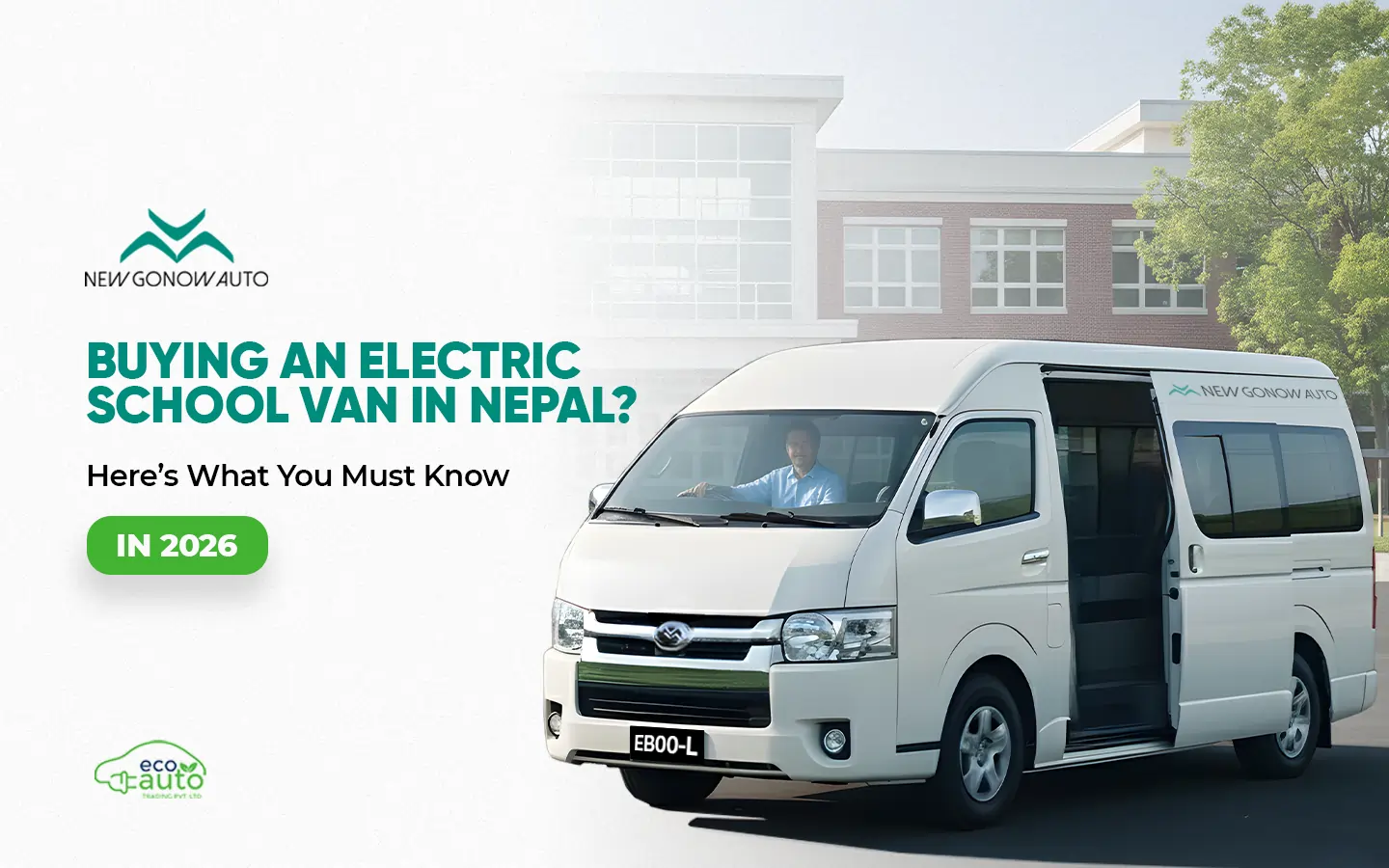

As more schools prioritize safety, efficiency, and sustainability, the demand for an Electric school van Nepal has grown faster than ever. With fuel prices rising and parents demanding cleaner transport options, 2026 marks a major turning point for school mobility in Nepal.
If you’re planning to invest in an electric van for your institution, school routes, or student shuttle service, this guide covers pricing, charging, range, safety, and cost comparisons-everything you must know before buying.More affordable and reliable models from local dealers like Eco Auto
1.Electric School Van Price Nepal: 2026 Price Guide
Price is the first concern for most institutions. The electric school van price Nepal in 2026 depends on:
- Battery capacity
- Motor power
- Seating layout
- Features like AC, safety tech, or smart displays
- Brand and after-sales support
While electric vans may have a slightly higher upfront price than petrol vans, long-term savings in fuel and maintenance make them the more economical choice.
Electric Van vs Petrol Van – Cost Comparison
Electric vans deliver:
- 70–80% cheaper daily running cost
- No oil changes or engine tune-ups
- Fewer parts → fewer breakdowns
- Lower lifetime maintenance
When you evaluate total ownership cost, the electric van vs petrol van comparison shows electric vans outperform petrol vans by a significant margin.
2. Performance & Range: What to Expect from EV Vans in Nepal
Modern EV van Nepal models are built specifically for hilly terrain, urban traffic, and daily school usage. Most 2026 electric vans offer:
- 150–250 km range per full charge
- Regenerative braking for energy efficiency
- Quiet and vibration-free motors
- Strong battery protection systems
These features make EV passenger van Nepal options perfect for school routes, staff transport, or multi-route schedules throughout the day.
3. Charging an Electric School Van: Everything You Need to Know
Charging infrastructure in Nepal has improved dramatically. Schools can choose from multiple charging options:
Charging Types:
- AC School/Campus Charging: 6–8 hours, ideal for overnight charging
- Fast Charging: 1–2 hours for quick turnaround
- Public EV Charging Stations Nepal: Available nationwide
Thanks to expanding EV charging Nepal facilities, long routes and full-day use are practical and reliable.
Many schools now install their own chargers for convenience, lowering operational costs further.
4. Zero-Emission, Eco-Friendly School Transport
Parents and institutions are increasingly aware of pollution around schools. Upgrading to an electric school van Nepal supports cleaner air and healthier commutes.
Electric vans are zero-emission vans Nepal, meaning:
- No smoke
- No harmful fumes
- No engine noise
- No heat release under the vehicle
For schools committed to sustainability, eco-friendly school transport Nepal is no longer optional- it’s the new standard.
5. Why Buying an Electric School Van in 2026 Is a Future-Proof Decision
As the number of new electric vans Nepal in the market and dealerships such as Eco Auto provide decent after sales service, the decision to go electric is not only feasible, but also a tactical move.
The Future Proofing of Why Buying an Electric School Van in 2026.
Benefits for schools:
- Long-term cost savings
- Safe and comfortable rides for students
- Improved school reputation
- Support for national clean-energy goals
- Better performance and reliability
If you plan to buy electric school van Nepal, 2026 is the best time-thanks to better models, improved range, and significantly lower operating costs.
Popular Electric School Vans from Eco Auto (2026)
If you’re considering an electric school van for your institution in Nepal, it helps to see which models are currently available, their specs, and which school types they suit best. Eco Auto offers a range of reliable EV vans designed specifically for Nepali roads and school transport needs.
| Model | Seating Capacity | Battery / Motor / Range* | Approx. Price (NPR) | Typical Charging & Running Cost (Nepal) | Best For / Notes |
| Gonow HM03-L (14‑seater) | 14 | 53.58 kWh battery, 60 kW motor, ~300 km (CLTC) | ~ NPR 5,450,000 | Full charge ≈ NPR 500-600 → cost per km ~ NPR 1.5-2 | Small schools, staff‑shuttle, city/suburban routes – compact, cost‑efficient option. |
| Gonow EB00 (16‑seater) | 16 | 86 kWh battery, 110 kW motor, ~400 km (CLTC) | ~ NPR 7,000,000 (Rs. 70 lakh) | Full charge ≈ NPR 800-900 (depending on electricity rates) | Mid‑size school transport, group tours – balanced capacity + range for daily/longer‑route use. |
| Gonow EB00L (19‑seater) | 19 | 86 kWh battery, 120 kW motor, ~350 km (CLTC) | ~ NPR 7,800,000 (Rs. 78 lakh) | Full charge ≈ NPR 1,200–1,400; cost per km lower than petrol/diesel alternatives | Large schools, heavy use, mass commute – ideal for long routes or many students. |
Eco Auto’s electric school vans are engineered to provide efficient, safe, and eco-friendly transport, making them a top choice for schools that want to invest in sustainable mobility. Whether you need a compact 14-seater, 16-seater for city routes or a 19-seater for large student groups, Eco Auto’s range ensures there’s a solution for every school size and requirement.
Conclusion
Electric vans have no alternative benefits to student transportation compared to other types of transport, and with a better charging infrastructure, better battery technology, and more EV vans on sale in Nepal, the benefits of EVs will be unmatched.
Eco Auto is an eco-friendly, dependable, and affordable electric school van that fulfills the requirements of the Nepali roads and schools.
FAQs
1. What is the price of an electric school van in Nepal in 2026?
The electric school van price Nepal varies by battery size, seating capacity, and features. Eco Auto offers updated 2026 pricing for schools and institutions.
2. Is an electric school van cheaper to operate than a petrol van?
Yes. In the comparison between the electric van and petrol van, the electric van has extremely lower running cost, low-cost energy, and low-cost maintenance.
3. What range do EV vans in Nepal provide for school routes?
Most EV passenger van Nepal models offer 150–250 km per charge – ideal for daily school and staff transport routes.
4. Where can I charge an electric school van?
Schools can install campus chargers or use public EV charging stations Nepal, which continue to expand across major cities and highways.
5. Why should schools choose an electric school van in Nepal?
An electric school van Nepal supports safety, savings, and sustainability. Electric vans are cleaner, quieter, and more efficient – making them the best option for eco-friendly school transport Nepal.