

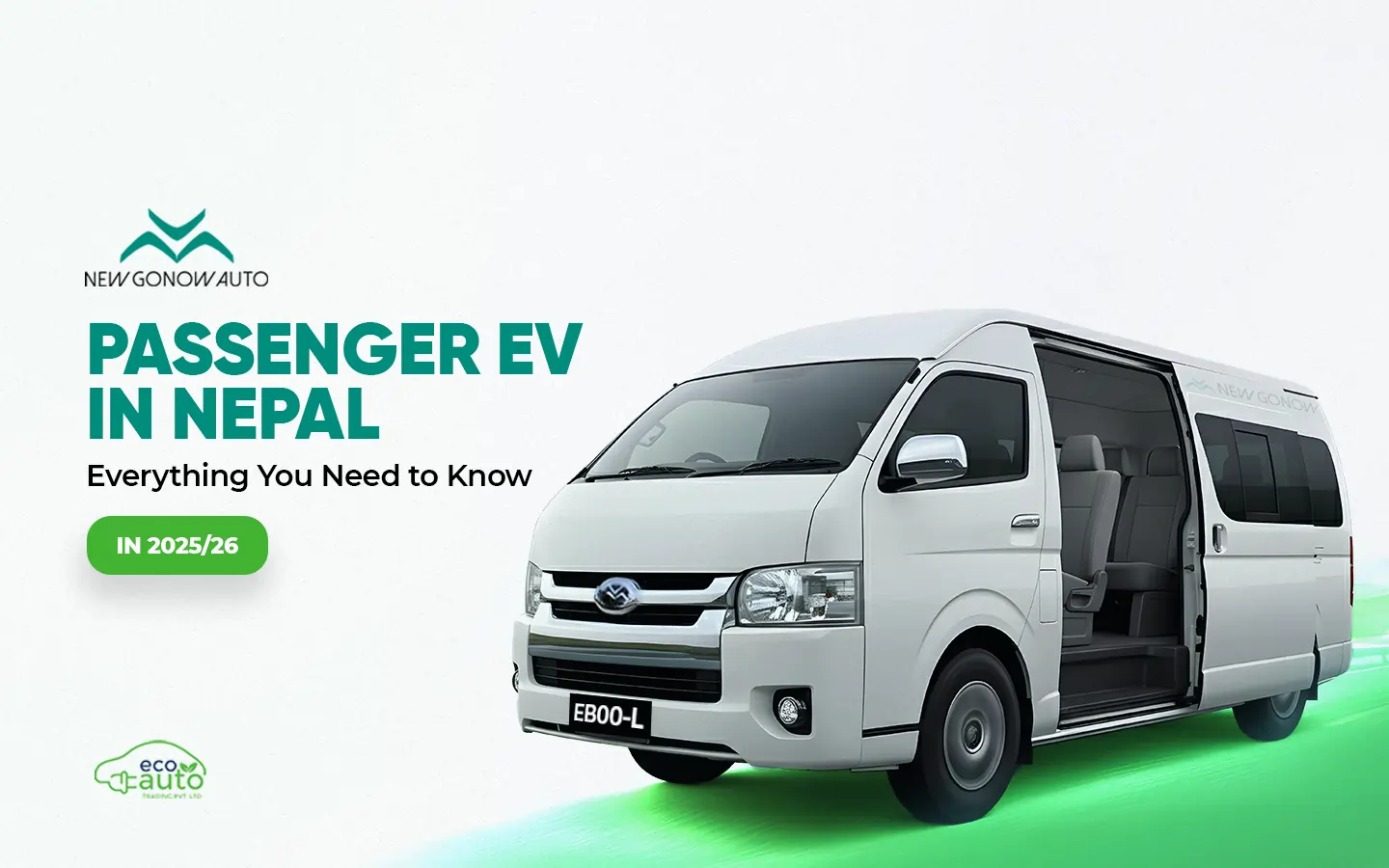

Popularity of Passenger EV in Nepal has surged in 2025/26 because of the movement of more individuals to sustainable, affordable, and high-performance mobility. Electric vehicles have become a mainstream option to Nepali families and daily commuters with escalating fuel costs, enhanced models, and better charging infrastructure.
This is a full guide to electric vehicles price in Nepal, taxes, charging points, benefits and the main market trends- specifically written in case you are intending to purchase an EV this year.
1. Nepal’s EV Market 2025/26: Why Passenger EVs Are Booming
Low running cost, silent driving experience and better technology have increased the level of demand of electric vehicles in Nepal. The brands which are currently more accessible, which include BYD, MG, Tata, Neta, Seres and GAC, have a stronger range and competitive pricing.
What’s Driving the Growth?
- Long range guns (300-600 km) capable of use on Nepali roads.
- Wider access to electric vehicles charging station in Nepal
- Supportive tax policies reducing overall EV cost
- More reliable servicing and warranty programs
- Rising awareness of clean energy transportation
As a result, the popularity of Passenger EV in Nepal continues to rise every year.
2. Passenger EV Price in Nepal (2025/26 Updated Guide)
Electric vehicles price in Nepal is imperative to purchase. The prices are dependent on the capacity of the battery, the motor power, the range, features and the brand reputation.
Apart from family cars, Nepal is also experiencing rising demand for 14 seater and 16 seater electric vehicles used by travel agencies and institutions.
| Motor Capacity (kW) | Approx. Price Range |
| 100 – 150 kW | NPR 40 – 55 Lakhs |
| 150 – 200 kW | NPR 55 – 75 Lakhs |
| 200 – 300 kW | NPR 75 Lakhs – 1.15 Crore |
| Premium EVs | NPR 1.2 Crore + |
Eco Auto regularly updates price lists so buyers can compare multiple models and pick the best-value Passenger EV in Nepal.
3. Tax Guide: Electric Vehicle Tax in Nepal (2025/26)
Understanding tax rules helps buyers estimate the final on-road cost. The government continues to apply a supportive framework for electric vehicle tax in Nepal.
Tax Structure for Passenger EVs
According to the 2024/25 budget (fiscal year 2081/82 BS) and a 2025 update, these are the customs and excise duties for imported electric cars.
| Motor-capacity (kW) | Customs Duty | Excise Duty |
| Up to 50 kW | 15% | 5% |
| 51-100 kW | 20% | 15% |
| 101-200 kW | 30% | 20% |
| 201-300 kW | 60% | 35% |
| Above 301 kW | 80% | 50% |
(Source:NepalDrivers)
Additionally, there is a value-added tax (VAT) of 13% applied to vehicles including EVs under the prevailing tax policy.
Also, for fiscal year 2025–26 (2082/83 BS), the government has maintained (“kept unchanged”) these rates.
Smaller and mid-range EVs benefit from lower tax on electric vehicle in Nepal, making them more affordable than similar petrol cars.
4. Electric Vehicles Charging Station in Nepal (Growth & Locations)
The increase in the electric vehicles charging station in Nepal has ensured that EV owners can now own their cars without any hassle or stress even when traveling over long distances.
Where Charging Stations Are Available
- Kathmandu Valley: Baneshwor, Naxal, Kalanki, Teku, Bhaktapur, Bhaisepati
- Highways: Kathmandu-Pokhara, Mugling, Chitwan, Bardibas, Itahari, Butwal
- Hotels & Malls: Increasing AC and DC fast chargers
Charger Types
- Home AC Chargers (3.3-7 kW): 6-10 hours
- Public AC Chargers (7-22 kW): 3-4 hours
- Fast DC Chargers (30-180 kW): 20-80% in 30-45 minutes
Charging coverage will continue improving, making it even more convenient to choose a Passenger EV in Nepal.
5. Why Passenger EVs Are the Best Choice for Nepali Roads
✔ 70% Lower Running Cost
EV charging is significantly cheaper than fuel, saving thousands every month.
✔ Lower Maintenance
No engine oil, fewer mechanical parts, and predictable servicing.
✔ Excellent for Hills
Instant torque improves climbing capability on routes like Kathmandu–Dhulikhel, Pokhara, Dharan, Hetauda, and more.
✔ Environmentally Friendly
Zero emissions support Nepal’s clean-energy policy.
✔ Better Resale Value
Demand for electric vehicles in Nepal is rising every year, increasing resale confidence.
6. Market Trends: What to Expect in 2025/26
- More mid-range SUV EVs in the NPR 60–80 Lakhs segment
- Improved battery density offering 500–600 km range
- Increase in home-charging installations
- Corporate and ride-sharing platforms shifting to EV fleets
- Wider charging network across highways
These trends indicate that Nepal’s EV market will continue growing rapidly.
7. Conclusion
Passenger EV in Nepal has become a smart, affordable, and future-ready choice for 2025/26. With lower running costs, supportive tax rules, and a rapidly growing electric vehicles charging station in Nepal, owning an EV is now more convenient than ever.
As electric vehicles price in Nepal remains competitive, choosing a Passenger EV in Nepal ensures cleaner mobility, better performance, and long-term savings.
For buyers who want updated EV information and comparisons, platforms like EcoAuto can be helpful for making well-informed decisions.
Frequently Asked Questions (FAQ)
1. What is the price of a Passenger EV in Nepal?
The price begins at NPR 40 Lakhs and exceeds NPR 1 Crore according to power and features.
2. Are there enough charging stations for EVs?
Yes. The number of AC and DC fast chargers is growing at an extremely high rate in cities and highways.
3. How much does it cost to charge an EV at home?
The charging cost is usually NPR 150 -250 with respect to the battery.
4. Do EVs work well in hill areas?
Absolutely. EVs have instant torque and so it suits the hilly nature of Nepal.
5. What taxes apply to EVs in Nepal?
Customs duty, excise duty, and VAT- details vary by kW capacity.